What Determines Custom Website Design Cost? A Guide to Project Scope
A website quote starts with what needs to change. Learn how design, content, functionality, and development shape the scope—and what to clarify before comparing proposals.


TL;DR
- Define the change you need: website design, development, branding, or a combination.
- Page count is a starting point. Unique layouts, content types, and functionality reveal more about the work.
- Content needs an owner and a schedule. Replacing copy and photography can expand a project that began as a visual refresh.
- CMS requirements, integrations, testing, and launch responsibilities belong in the scope.
- Share your deadline, budget expectations, and open questions. You do not need every answer before starting a conversation.
A website refresh can start with a simple idea: keep the content, give it a new look. Then the service pages need rewriting, the photography feels dated, and the contact form needs to talk to your sales system. The idea still makes sense. The work behind it has changed.
Custom website design cost depends on that work: what the website needs to do, what is ready to use, and what needs to be designed, written, built, or connected. This guide explains how those requirements shape a tailored quote and how to compare proposals that may include very different things.
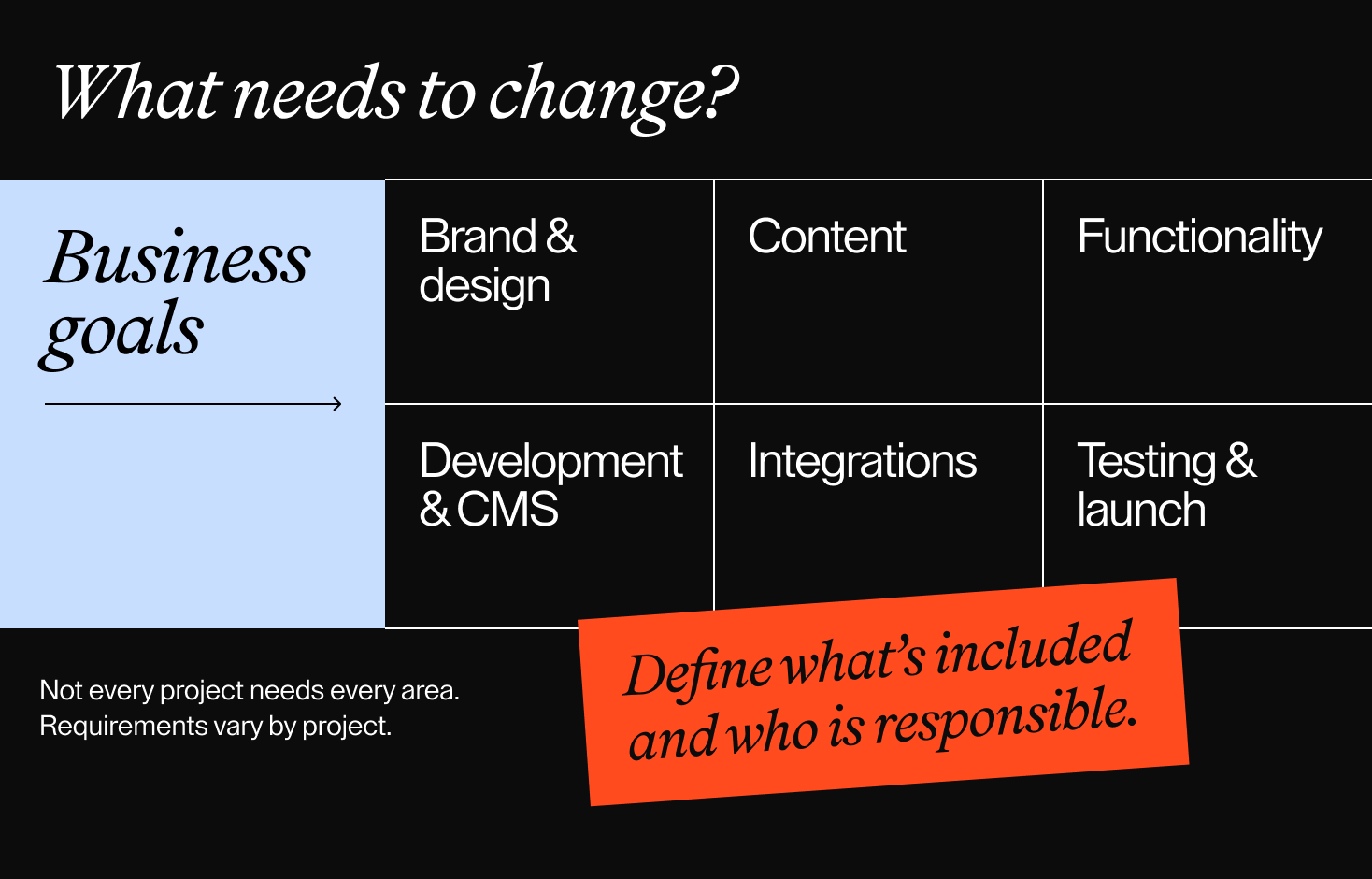
Start with the change you want to make
Before asking “how much does a website cost?”, describe what should be different when the project is finished. Perhaps visitors struggle to understand your services. Perhaps your brand has moved on, but your website has not. Or your team needs a better way to publish content without asking a developer for every update.
These goals lead to different tasks. A clearer service structure may require content planning and UX work. A new brand direction may involve identity design before website layouts. Better editing tools may require changes to the CMS and its underlying content structure.
At Flair, a useful starting point is understanding whether you need website design, development, branding, or a combination. A design-only quote and a proposal covering the complete build are not describing the same deliverable. Ask each team to make that boundary explicit.
Page count only tells part of the story
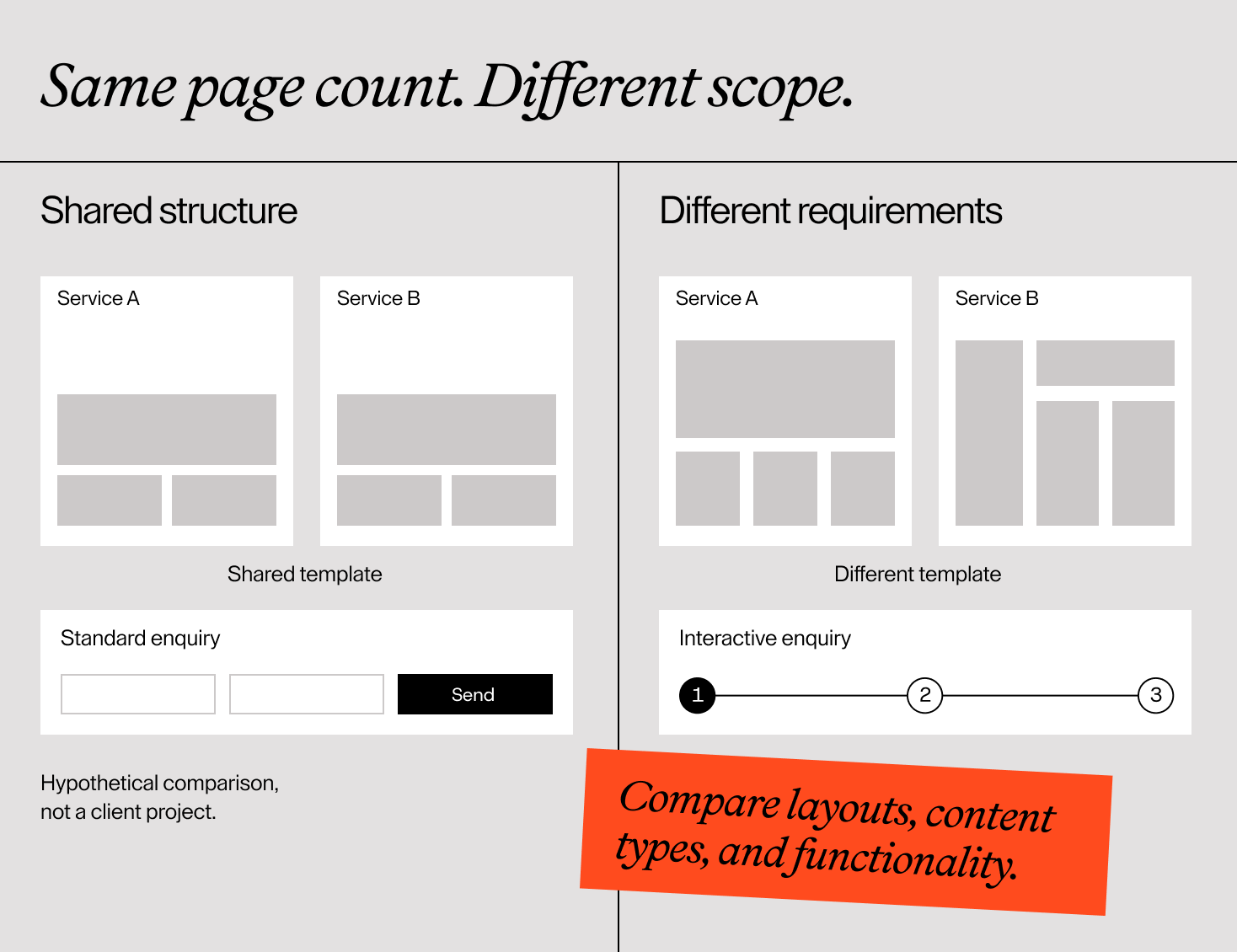
A sitemap is helpful because it shows what the website needs to contain. But a list of pages does not show how different those pages are.
Several service pages might share the same layout, with different copy and images. Another site with the same page count might need a distinct layout for each service, an interactive project finder, and a more involved enquiry flow. The amount of design, development, and testing changes even though the page count does not.
When defining website design scope, separate pages from reusable templates and content types. An article, a case study, and a service page may each need their own structure. Also clarify how those structures behave on smaller screens and what your team should be able to change later.
Design complexity and brand readiness
Custom design can involve more than selecting colours and arranging sections. It may include a new visual direction, custom illustration, motion, interactive elements, and layouts built around your content. Each element needs to be designed and, where relevant, implemented and tested.
A visually quiet website can still require careful work. Clear hierarchy, readable typography, responsive behaviour, and accessible interactions do not happen automatically because a page looks simple.
Brand readiness also matters. If your identity, imagery, and visual guidelines are ready, the website team has a foundation to work with. If those decisions are still open, make room for them in the scope. Reference websites help here: explain what you like about their structure, imagery, or interactions, rather than asking for the whole site to feel “like this”.
Content needs an owner, too
One recurring issue we see at Flair is uncertainty around copy: who will write it, when it will be ready, and what it needs to say. A project may begin with a plan to reuse existing text and images, then turn into a broader content refresh.
That affects more than the writing task. New messaging can change the page structure. Different photography can change the layout. Late content decisions may mean revisiting work that has already been approved.
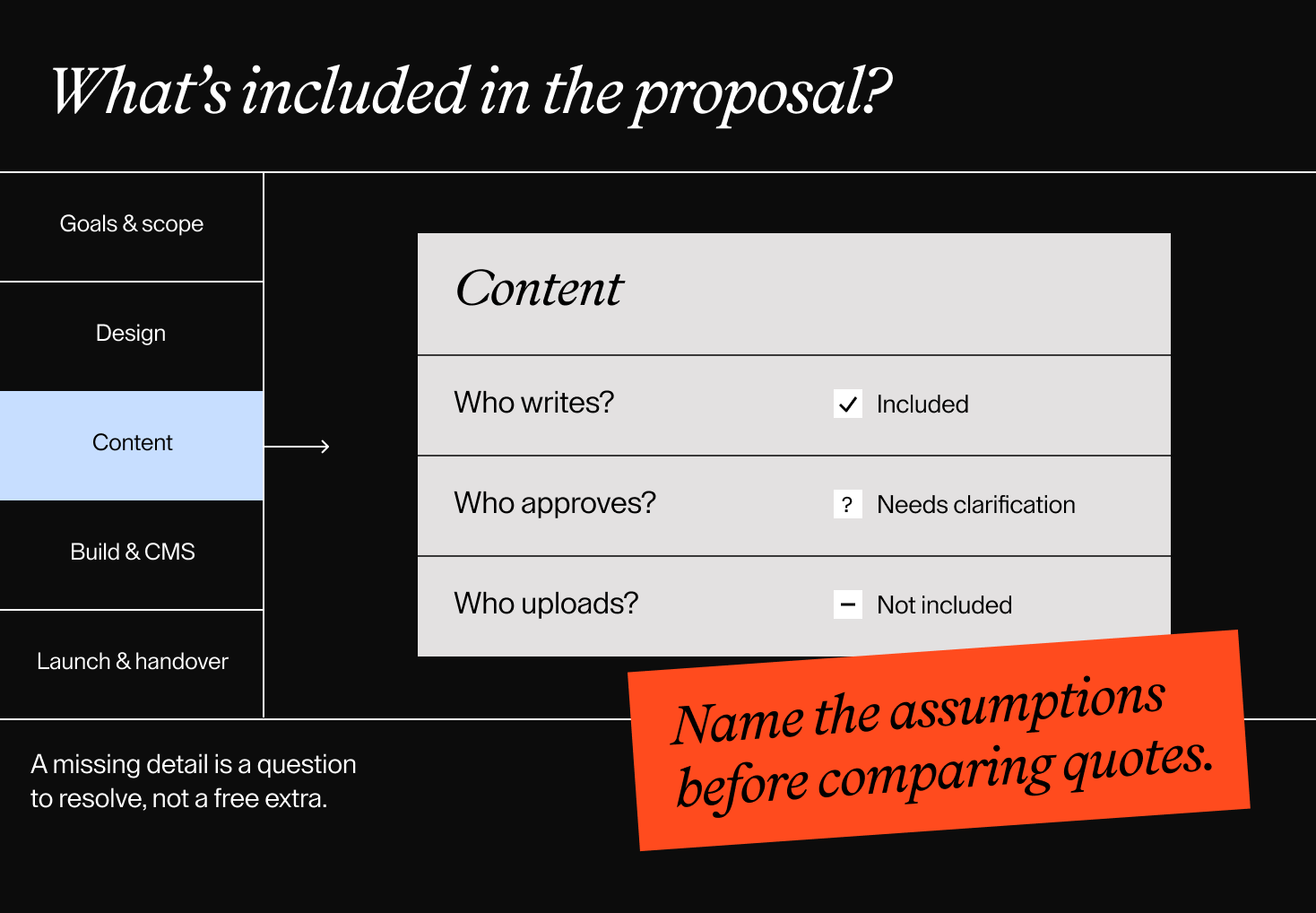
Before the quote is finalised, agree which content will be reused, edited, or created. Name the person responsible for writing and approving it, and include photography, translations, and content migration where needed. If you are not ready to decide, identify the open questions and agree how they will be resolved.
Have a project in mind?
Let’s talk
Contact us
Functionality, CMS, and integrations
“An editable website” can mean different things. Your team might only need to update text and images within fixed layouts. Or it might need to build landing pages, publish several content types, manage languages, and control who can approve changes. Those requirements influence both CMS setup and design.
The same applies to functionality. A contact form might send an email. A more involved enquiry could route requests, conditionally show fields, and pass information to a CRM. Describe what should happen after someone clicks or submits—not only what appears on screen.
For integrations, clarify the systems involved, the information exchanged, and who can provide access and documentation. Existing plugins or services may cover some needs, while others require custom development. The team needs to assess that fit before treating an integration as a small addition. Ask what the quote assumes and what happens if those assumptions do not hold.
Deadlines, feedback, and changes affect the plan
Your deadline is part of the brief. A fixed launch tied to an event creates different planning constraints from a flexible refresh. Share that context early so the team can discuss priorities, dependencies, and what needs to be ready for launch.
Budget expectations are useful context too. They help the conversation focus on priorities and possible phases. You can discuss them directly with the team without expecting a public price list to answer every project question.
New ideas will come up. The important thing is to agree how they will be handled. Refining an agreed page and adding a new feature are different kinds of change. A proposal should explain feedback rounds, approvals, and how additional work affects the quote and schedule.
Look beyond the approved design
Check what happens between design approval and a live website. Does the proposal include development, content entry, testing across screen sizes and browsers, accessibility checks, redirects, and launch support? Which of those tasks belong to your team?
Also separate project delivery from ongoing commitments. Hosting, software subscriptions, maintenance, and future improvements may be handled independently. Ask what is included, what is optional, and who owns the website, accounts, and files after handover.
These details are website design cost factors even when they are not visible in a mockup. They determine how much work is covered by the proposal and how much remains for someone else.
How to request and compare proposals
You do not need a perfect brief to start. Bring a clear description of the change you want, the most complete sitemap you have, reference websites with a short explanation, your deadline, and your budget expectations. Add known functionality and content responsibilities, and mark anything that still needs discovery.
Then compare proposals against the same questions:
| Area | What to clarify |
|---|---|
| Goals and scope | What problem is being solved, and what is outside the project? |
| Design | Which templates, responsive layouts, and custom assets are included? |
| Content | Who writes, approves, supplies, and enters the content? |
| Build and CMS | What will be built, and what can the team edit? |
| Integrations | Which connections are included, and what assumptions do they rely on? |
| Feedback and changes | How are revisions, approvals, and additional requests handled? |
| Testing and launch | What will be checked, who launches, and what must the client provide? |
| Handover and support | What is handed over, and what continues after launch? |
For each area, note whether it is included, excluded, or needs clarification. A missing detail is a question to resolve, not evidence that a supplier will deliver it for free.
If you are also deciding who should deliver the work, our guide to web design agencies vs freelancers looks at capabilities, coordination, and ongoing responsibility.
A clearer scope makes a more useful quote
The useful question is what your website needs to become—and what it will take to get there. Once goals, design, content, development, and responsibilities are visible, website design cost becomes easier to discuss and proposals become easier to compare.
Still working out the scope? Tell us what you want to change, what you already have, and what is still open. That gives us a useful place to start.
FAQ