Web Design Agency vs Freelancer: Which Fits Your Project
A practical comparison of web design agencies and freelancers, with guidance on project fit, capabilities, coordination, continuity, accountability, support, and cost.

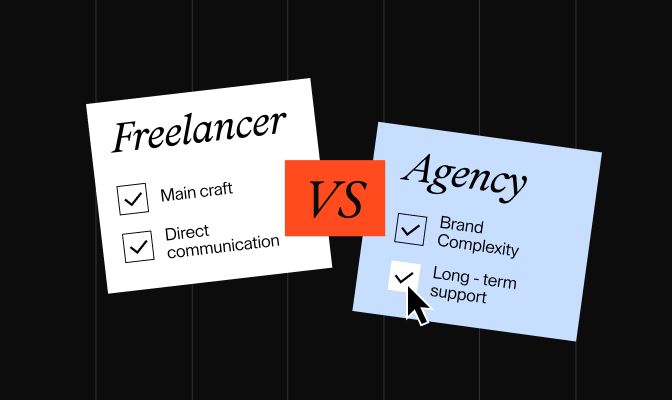
TL;DR
- Choose a freelancer when the scope is narrow, the deliverable is clear, and one strong specialist can own most of the work.
- Choose an agency when the project needs several capabilities working together, such as strategy, UX, UI, development, QA, and support.
- The real comparison is not just price. It is coordination, accountability, continuity, and how much risk the client wants to manage internally.
- Both models can be sensible. The right choice depends on project complexity, internal capacity, timeline, and how important the website is to business operations.
Choosing between a web design agency and a freelancer comes down to project risk, scope, and the support you need after launch. A freelancer can be the sharper choice for focused work, while a branding and web design agency fits better when strategy, UX, design, development, coordination, and long-term accountability all need to work together.
The simplest way to compare both options
A freelancer is usually one independent specialist or a very small network. You work directly with the person doing the work. That can make communication fast, flexible, and personal. It also means the project depends heavily on that person’s availability, process, and skill range.
A web design agency is a team model. The work may involve strategy, UX, visual design, content guidance, development, QA, project management, and support. The extra structure can feel heavier at first, but it becomes valuable when the project has many moving parts or needs to survive beyond one launch.
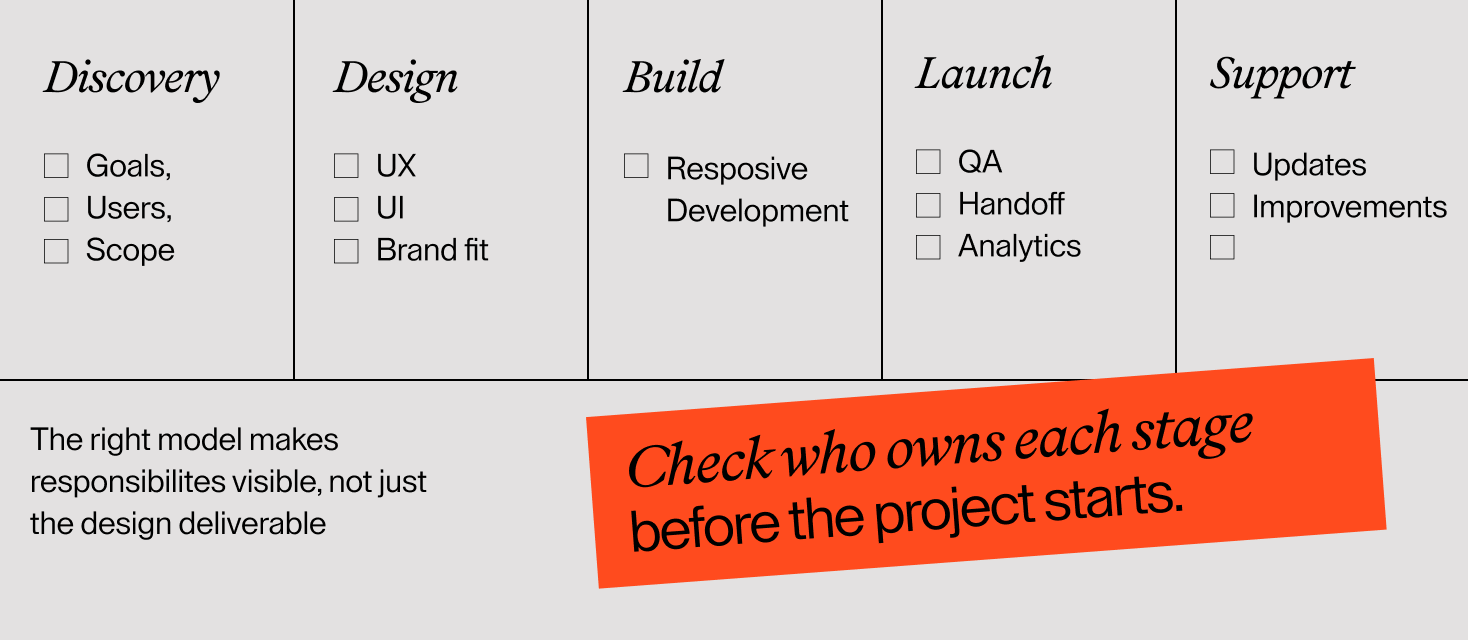
A fair comparison starts by separating the website into actual responsibilities. Who defines the strategy? Who plans the UX? Who designs responsive layouts? Who builds the CMS? Who tests the site? Who supports it after launch? The more boxes one person must cover, the more carefully you need to check whether a freelancer is the right fit.
When a freelancer is the sensible choice
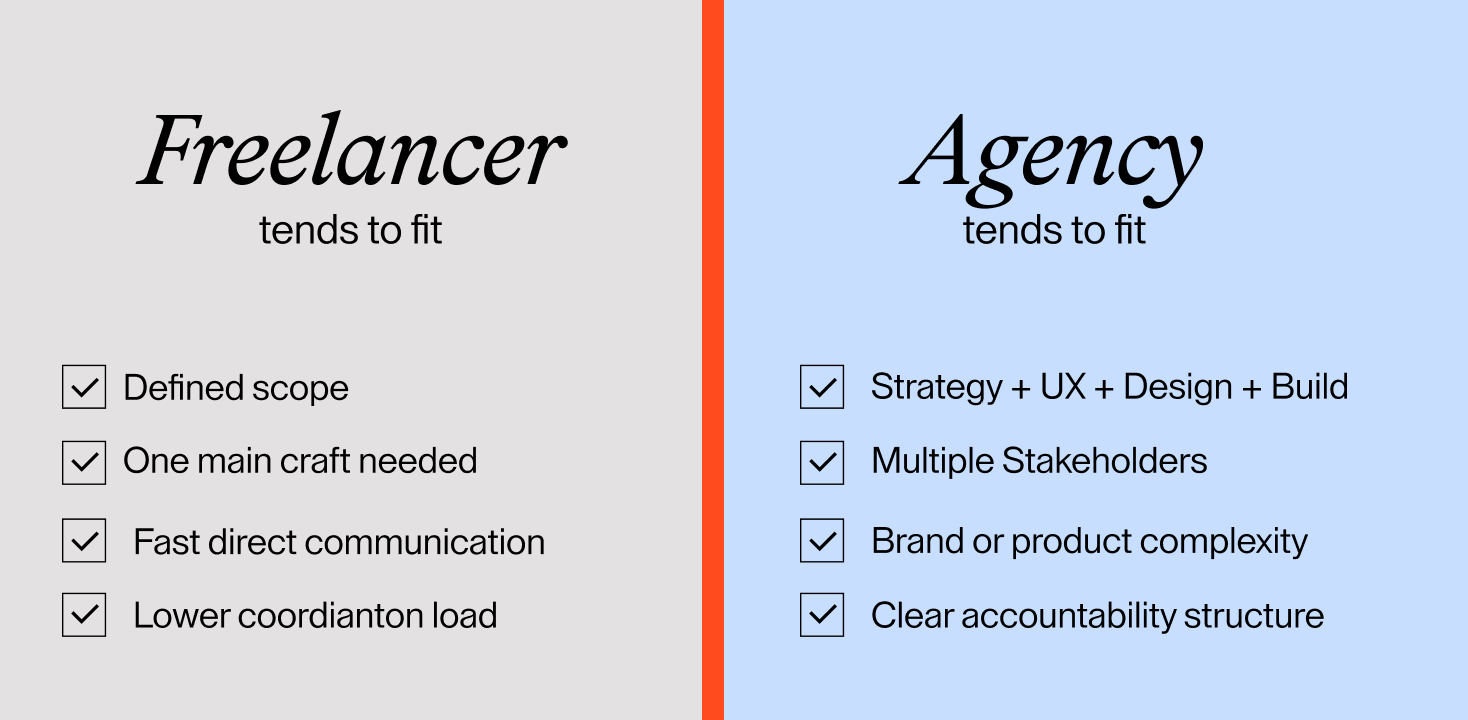
A freelance web designer can be the right choice when the brief is clear and contained. For example, a founder may need a small marketing site, a landing page for a campaign, a few designed templates, or improvements to an existing page. If the brand is already defined and the technical setup is simple, one skilled person may move faster than a larger team.
Freelancers can also be useful when a company already has internal support. If you have a product manager, developer, copywriter, marketer, or designer on the team, the freelancer does not need to carry the whole project system. They can plug into a specific gap.
The trade-off is capacity. If the project expands from “design these pages” into positioning, UX research, content structure, custom development, analytics, QA, stakeholder workshops, and post-launch improvements, the client often becomes the project manager. That can work, but only if someone internally has the time and experience to coordinate decisions.
When a web design agency is the better fit
A web design agency tends to fit when the project affects how the business is understood, trusted, or operated. Redesigning a corporate website, launching a new product site, rebuilding a service architecture, or combining brand and digital experience usually needs more than a polished visual layer.
The value of an agency is not simply that more people are available. It is that different disciplines can challenge the work at the right moments. Strategy checks whether the site is saying the right thing. UX checks whether people can understand and navigate it. Design checks the hierarchy and brand expression. Development checks performance, CMS practicality, responsive behavior, and launch quality.
Flair’s services show this kind of combined work clearly: branding, UX/UI design, visual design, and development sit in one connected process. That matters when a website has to carry brand credibility, explain complex services, and remain maintainable after launch.
Capabilities: one specialist or a coordinated team
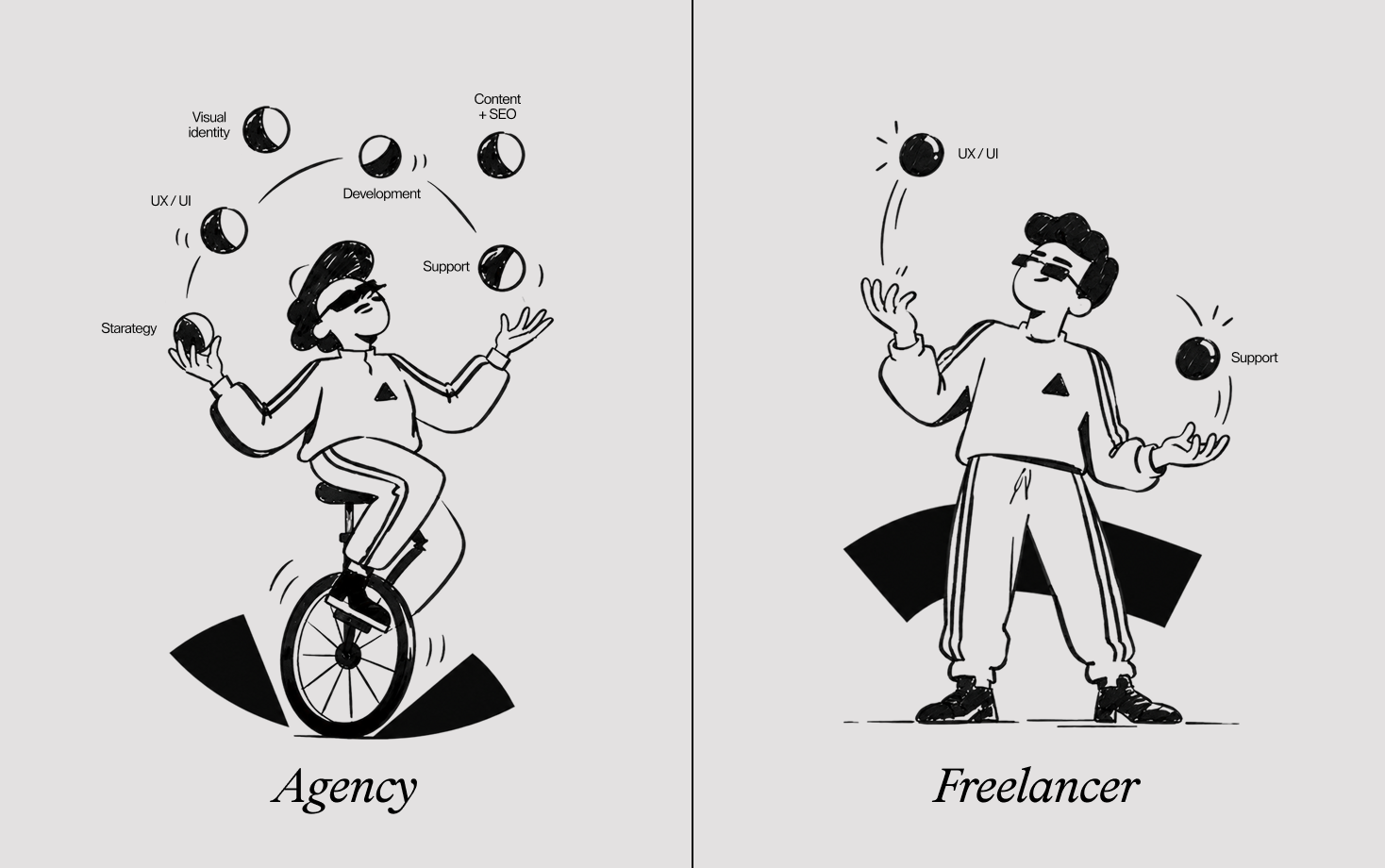
The phrase “web design” can hide a long list of work. A small site may only need layout design and a simple build. A more serious website may need positioning, sitemap planning, user flows, copy direction, UI design, motion, illustration, front-end development, CMS setup, QA, analytics, and maintenance.
A strong freelancer may cover several of these areas well. Some freelance designers are excellent strategic thinkers; some also build. The important question is not whether the person has the title “freelancer.” It is whether the project needs depth in one area or reliable coverage across many areas.
Agency work becomes more useful when the website has dependencies. If a new CMS affects content workflows, design decisions affect development effort, and brand choices affect conversion clarity, the project needs people who can coordinate those dependencies before they become expensive fixes.
Coordination and communication
Freelancer communication is often direct. You can speak to the person doing the work, make decisions quickly, and avoid layers of process. That is useful when the client has one decision-maker and the work does not require many approvals.
Agency coordination is more structured. There may be a project lead, design reviews, technical checks, scheduled feedback rounds, and clearer documentation. That can feel slower, but it helps when several stakeholders need alignment or when decisions must be traceable.
For a project with founders, marketing, sales, product, and technical stakeholders, coordination is not administrative overhead. It is part of the work. Without it, the website can become a collection of individual preferences instead of a clear business asset.
Continuity, accountability, and support after launch
A website project does not end when the final design is approved. Someone still needs to manage QA, launch checks, CMS handoff, redirects, bug fixes, performance improvements, and later content or feature changes.
With a freelancer, continuity depends on the relationship and availability. Some freelancers provide excellent long-term support. Others move on to new projects quickly or have limited capacity once the main build is done. This is not a flaw in the model, but it has to be planned.
With an agency, continuity is usually easier to formalise. There can be shared documentation, more than one person who understands the project, and a support process that does not depend on a single individual being available. This is especially important for websites that support sales, recruitment, customer education, or internal operations.
How project type changes the decision
The same company may use both models at different moments. A freelancer might be the right fit for a landing page today, while an agency becomes the better choice for a full redesign next quarter. The decision should follow the project, not a fixed belief about one model.
Here is a practical way to compare the fit before choosing.
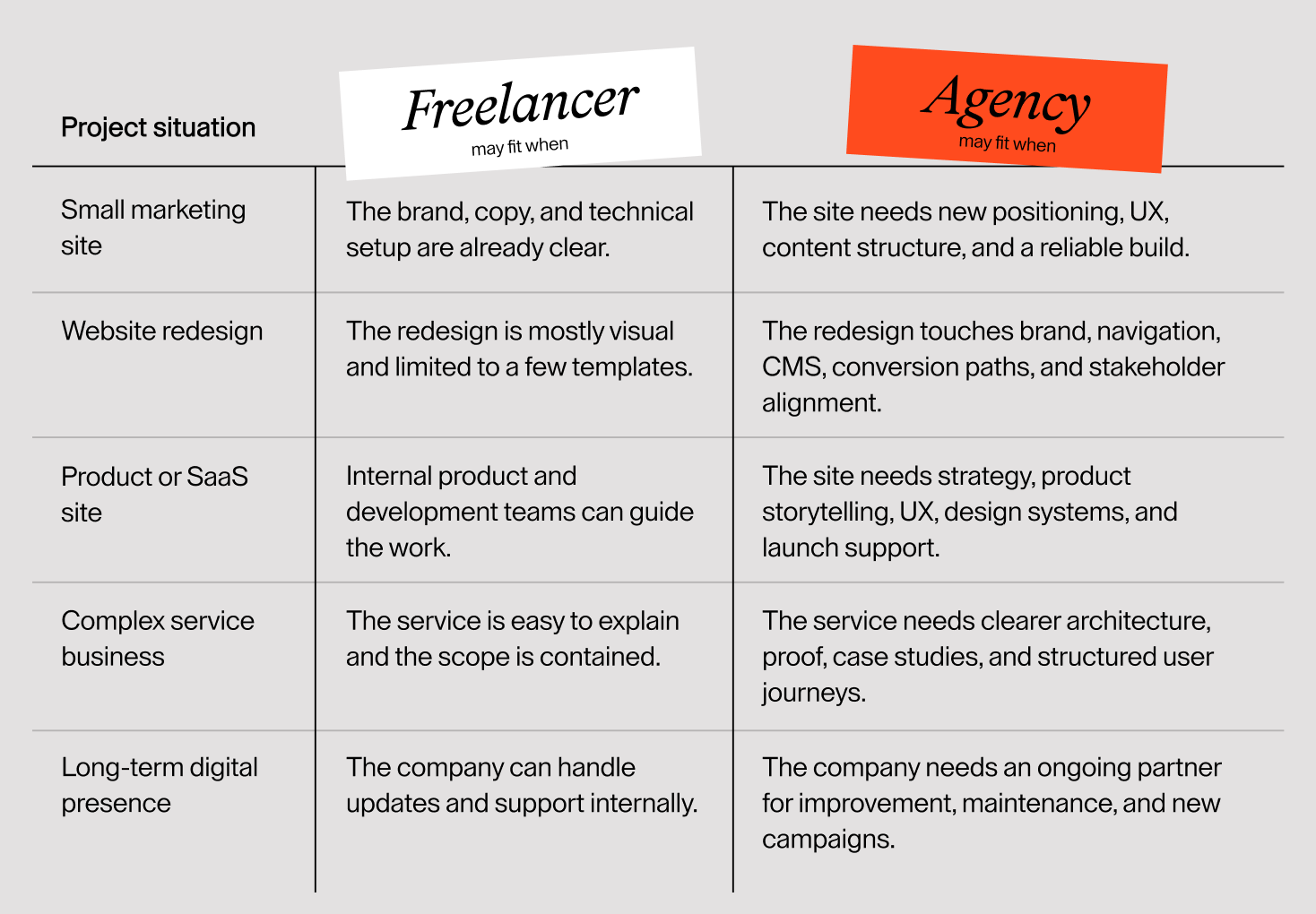
This is also where case-study fit matters. On the Fulmenn project, Flair describes a brand modernisation and website for an oversized transport company where the structure had to explain technical services, projects, and process steps without overwhelming visitors. On the UNESCO Lithuania project, the work involved organising a wide range of content into one consistent visual and website experience. Those are examples of situations where coordination across disciplines is part of the value.
Cost: look past the day rate
Freelancers often look more affordable at the start because there is less team structure and fewer roles involved. For a narrow project, that can be a genuine advantage. Paying for an agency process when you only need one specialist may be unnecessary.
Agency costs tend to be higher because more responsibility is included. The fee may cover planning, design direction, multiple skill sets, project management, development checks, QA, documentation, and post-launch support. Whether that is worth it depends on the cost of getting the website wrong.
A useful budget question is: what risk are we paying to reduce? If the site is low-risk and easy to revise, a freelancer can be efficient. If the site needs to support sales, hiring, funding, onboarding, or market credibility, the cost of poor strategy or weak execution can be much higher than the difference between quotes.
A decision checklist before you choose
Before comparing proposals, define the project clearly enough that both models can be judged fairly. A vague brief makes a freelancer look cheaper and an agency look excessive, even when neither comparison is accurate.
Use these questions before you decide:
If most answers point to a narrow, low-risk, well-defined project, a freelancer may be the cleanest choice. If the answers reveal complexity, dependencies, or long-term expectations, an agency is usually easier to hold accountable.
- Do we need one specialist, or several disciplines working together?
- Do we already have brand strategy, copy, content structure, and technical requirements?
- Who will manage feedback, decisions, QA, and launch details?
- How important is the website to sales, trust, recruitment, support, or operations?
- What happens after launch if something breaks or the site needs to evolve?
- Can one person realistically cover the full scope without creating risk?
- Would a more structured process save time later, even if it costs more upfront?
Conclusion
The web design agency vs freelancer decision should not be reduced to team size or price. A freelancer can be a sharp, efficient choice for focused work with clear ownership. An agency becomes more useful when the project needs strategy, several capabilities, structured coordination, and support beyond launch. The best choice is the one that matches the real complexity of the project and the amount of responsibility your team is ready to carry.
FAQ